Welding service in Radolfzell · stainless steel, aluminium, steel Your part. Our weld.
From a single bracket to a complete welded assembly: at eight welding stations we weld stainless steel, aluminium and structural steel to drawing, to sample or as a repair – for businesses from Radolfzell, Konstanz, Singen and the Hegau, with shipping throughout Germany and across Europe.
In brief
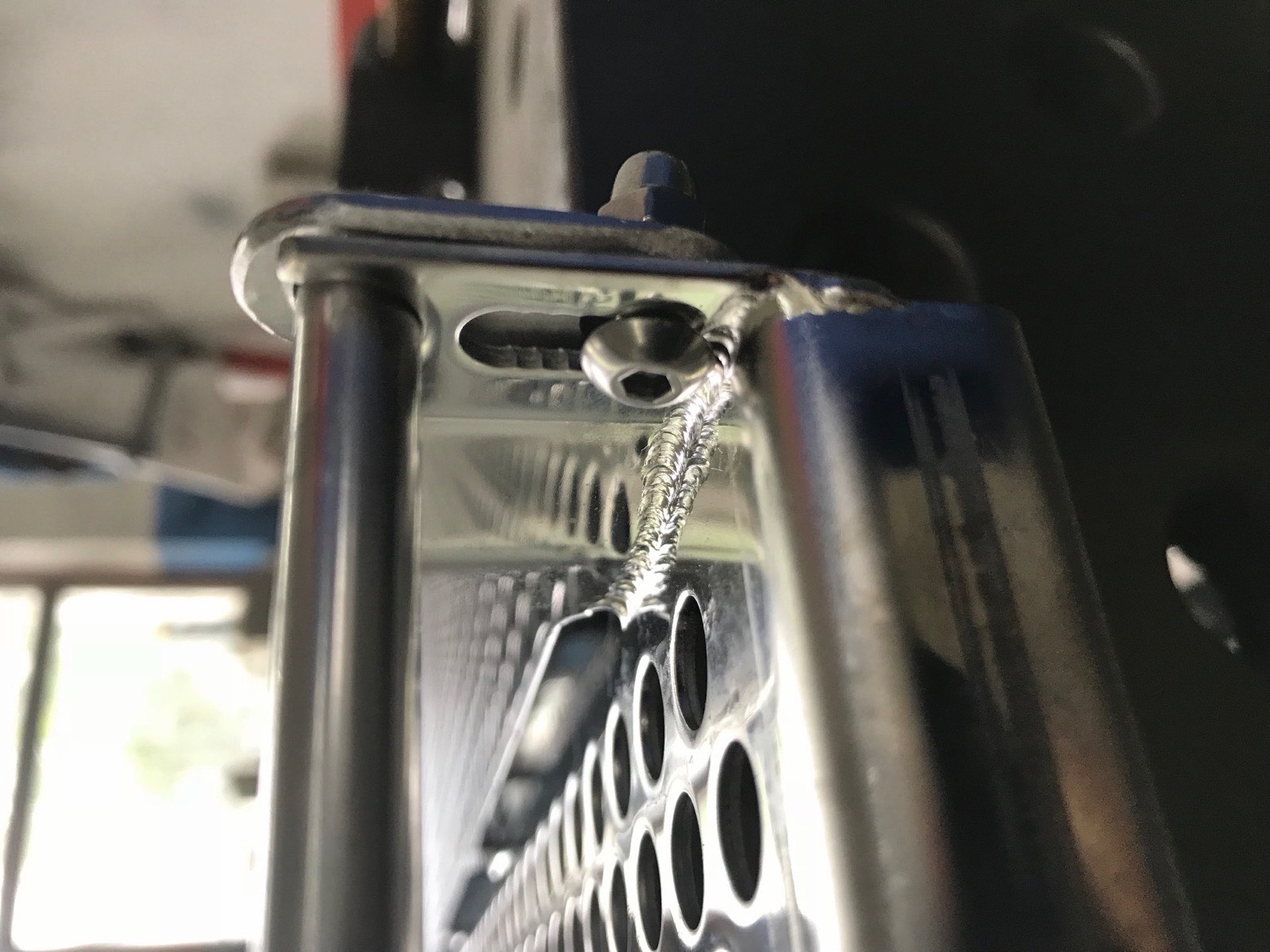
Kemmer Edelstahlschlosserei GmbH in Radolfzell on Lake Constance, Germany, offers welding as a contract service: one-off parts and small series to drawing, complete welded assemblies and repairs. The focus is on stainless steel in the grades 1.4301, 1.4404, 1.4571 and 1.4462; aluminium and structural steel are welded too. The processes are TIG, MIG and MAG at eight welding stations.
Cutting, bending and rolling before welding, and grinding, brushing and leak testing afterwards, are all done by the company under the same roof. Parts can be dropped off in Radolfzell or sent by parcel from anywhere in Germany or elsewhere in Europe – from one piece. We reply in German or English.
What we weld
From the one-off part to the finished assembly
To drawing
One-off parts and small series: we cut, bend and roll the parts ourselves, tack them in the jig and weld them into the finished assembly – frames, racks, housings, containers, trays.
Tube structures
Tube coils, tube bundles, extraction ducts and railings – bent, rolled and welded.
Repair welding
Broken-off brackets, cracked welds, leaking stainless steel containers: we take a look at the part and tell you whether the repair is worthwhile or a new part is the better option.
With finishing and testing
Welds ground flush or brushed, on request tested for leak-tightness by dye penetrant testing or pressure testing.
Processes
TIG, MIG or MAG?
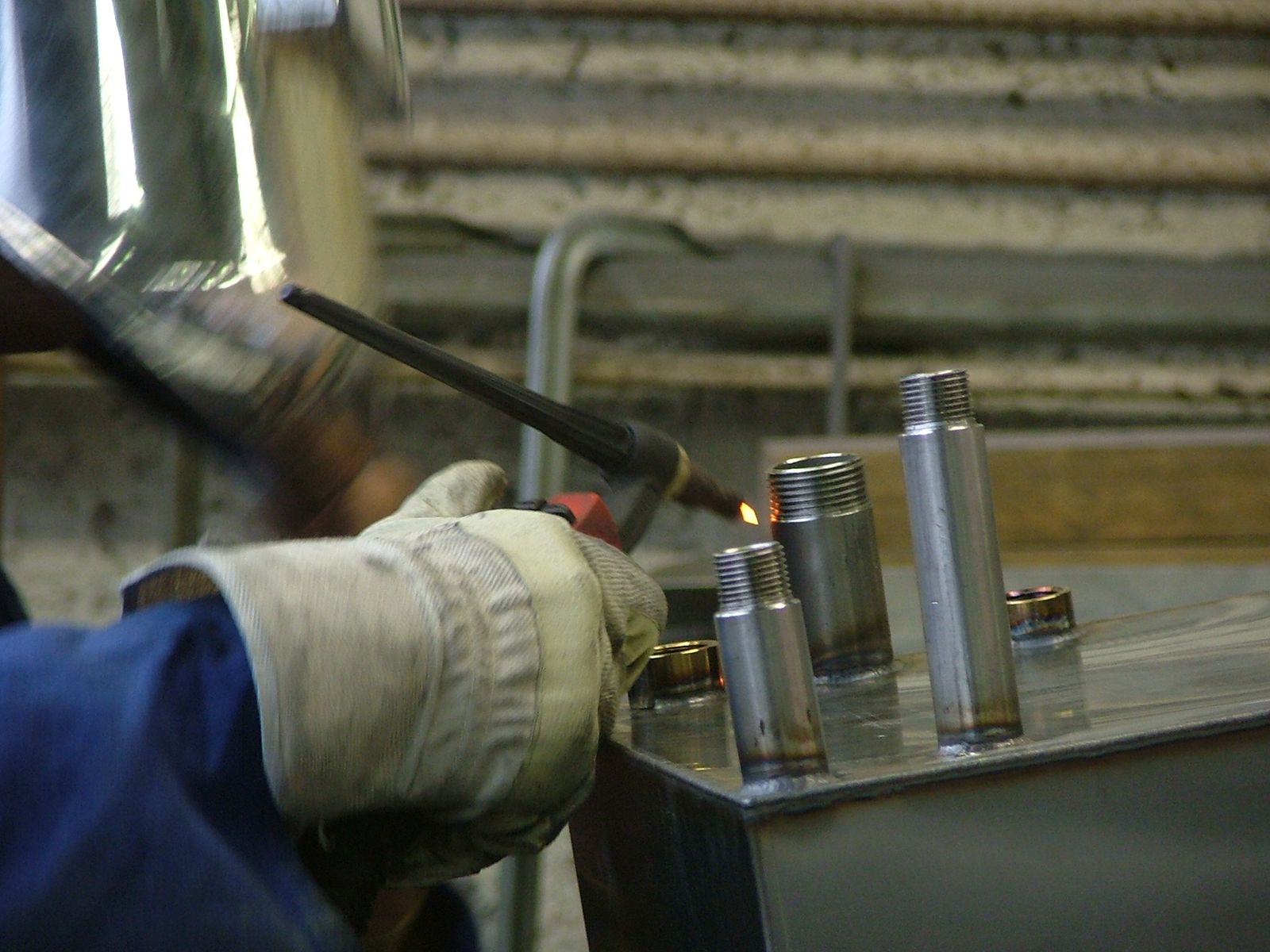
We choose the process according to sheet thickness, weld length and the required appearance.
- TIG for thin sheet, tubes, containers and visible welds – the cleanest weld, hardly any spatter.
- MIG and MAG for thicker sheet and long welds, when a lot of material has to go into the weld.
- Aluminium and structural steel: aluminium is usually TIG or MIG welded, structural steel MAG welded.
- Jigs for series, so that the tenth part looks like the first.
Weld type
Tack-welded, stitch weld or fully welded?
Not every corner needs a continuous weld. You decide what we weld – on the drawing, in the request or in the sheet metal designer for boxes with welded corners.
-

Tack-welded
Short tack welds at intervals hold the sheets in position. Enough where the corner carries no load and nothing has to be leak-tight – and the quickest option.
-

Stitch weld
Intermittent weld in sections. Holds firmly, puts less heat into the sheet and distorts thin sheet less than a continuous weld – but it is not leak-tight.
-
Fully welded
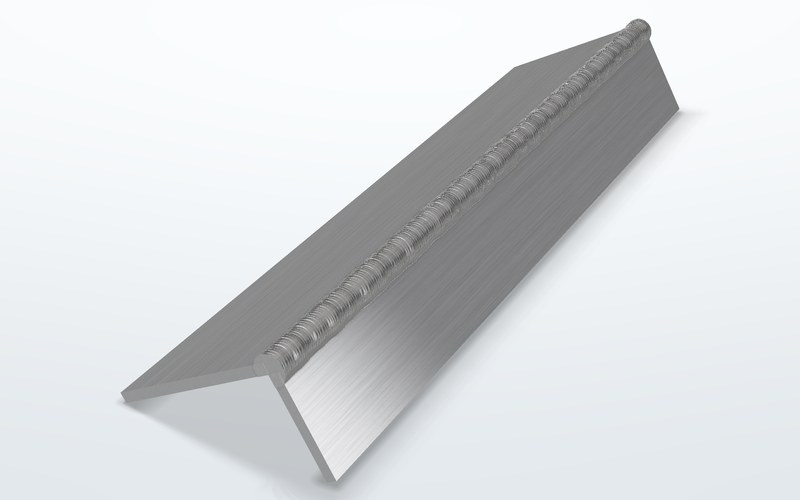
Continuous weld along the whole length: the strongest joint and a prerequisite for liquid-tight containers and trays.
Weld side
Inside, outside or both sides
On the outside the weld is visible; welded on the inside, the outer face stays smooth. Welded on both sides, the corner has no gap on the inside where dirt or liquid can collect – important for food and pharma.
-
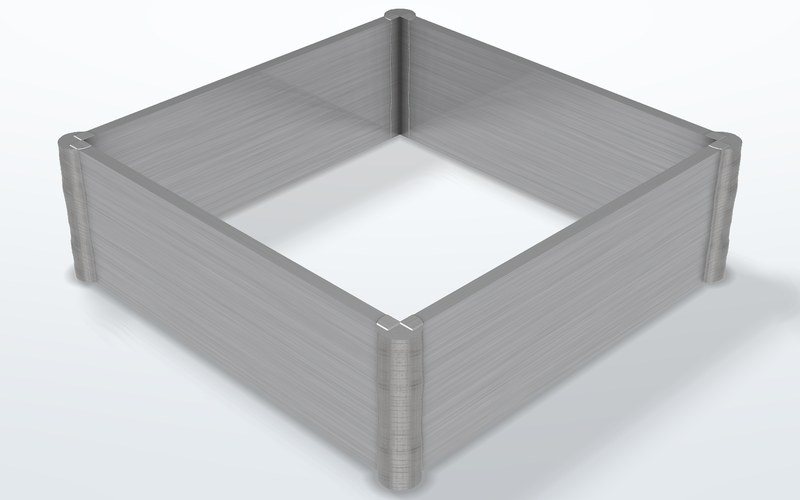
Outside
Bead on the outside corner, the joint remains on the inside.
-
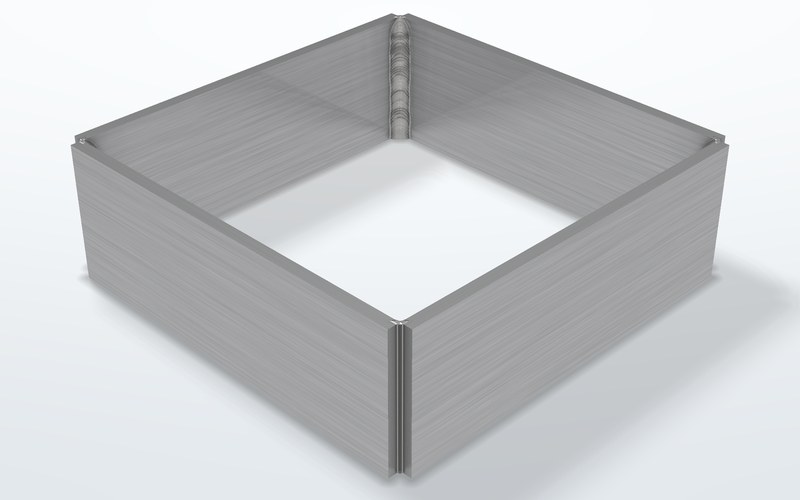
Inside
Fillet weld in the inside corner, the outside stays without a bead.
-
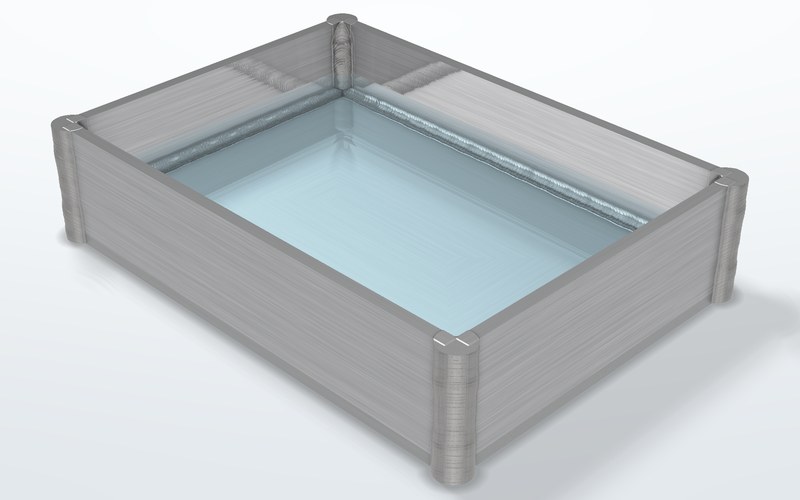
Leak-tight
Fully and continuously welded, for trays and containers holding liquid – on request tested by dye penetrant testing or pressure testing with a pump, with a test report.
Rendered views, not photos – they show the principle. Photos of completed work can be found under References.
After welding
Why the weld is finished afterwards
Welding leaves heat tint at the weld. It weakens the passive layer that protects stainless steel from rust – left untreated, the weld may show rust later.
That is why heat tint is removed: mechanically by grinding and brushing or chemically by pickling. What your part needs depends on the material and the application and is stated in the quote.
-
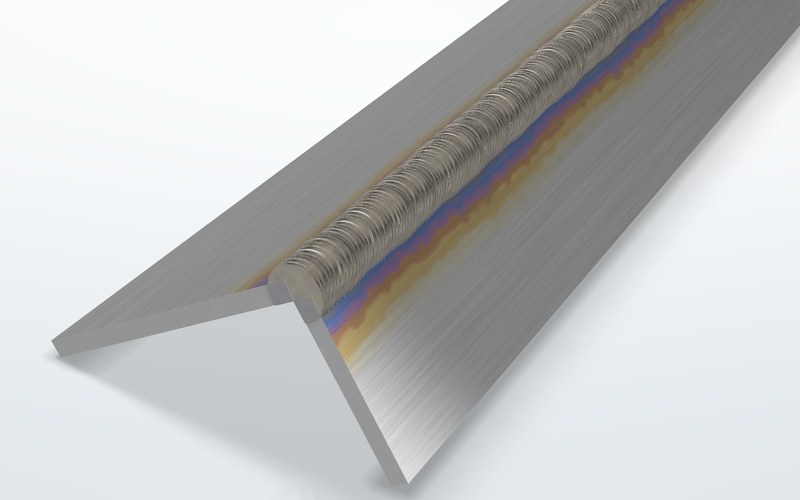
With heat tint
This is how the weld comes from welding: gold, bronze, blue – here the passive layer is weakened.
-

Brushed
Heat tint removed mechanically, the bead remains visible.
-

Pickled and passivated
Chemically cleaned: evenly matt, the passive layer forms again – even in corners no brush can reach.
-
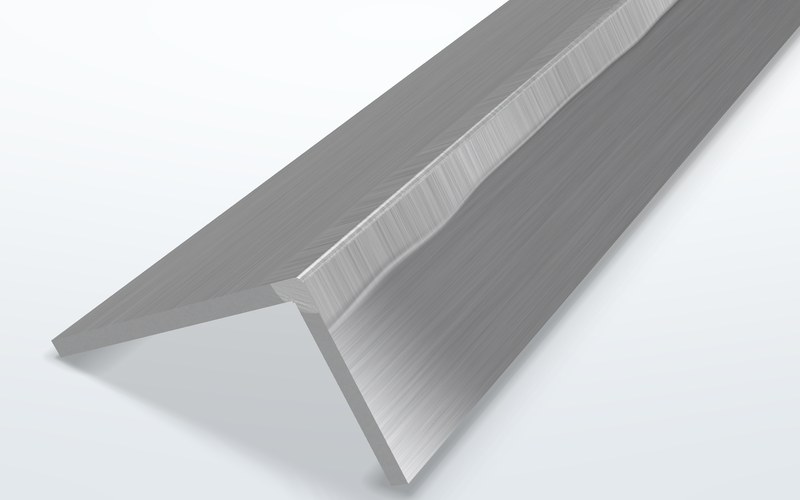
Ground flush
Weld ground flush, smooth corner without a bead – for visible surfaces and parts that are easy to clean.
Box with welded corners in the sheet metal designer: choose weld type, side and finishing
Drop off
Drop off your part in Radolfzell
From the district of Konstanz and the Hegau it is not far: bring the part along – ideally after a quick call, so that someone has time to look at it with you.
- Böhringerstraße 39/1, 78315 Radolfzell am Bodensee, Germany
- Mon–Thu 7:00–12:00 and 13:00–16:30, Fri 7:00–12:15
- Phone +49 7732 3511
Frequently asked questions
About our welding service
What does it cost to have stainless steel welded?
That depends mainly on the length and type of the welds, the material thickness, the preparation – cutting, tacking, jig –, the finishing and any leak testing. With series, the set-up is spread over several parts. For repairs, we can estimate the effort once we have seen the part. We state the price in the quote.
Can I drop off a part for welding?
Yes, at Böhringerstraße 39/1 in Radolfzell, Mon–Thu 7:00–12:00 and 13:00–16:30, Fri 7:00–12:15. Please call briefly beforehand on +49 7732 3511. From further away, send the part by parcel.
Do you also weld single parts and small repairs?
Yes. One-off parts are the norm for us, not the exception. With a repair, we tell you honestly if a new part is the better solution.
Does stainless steel rust at the weld?
It can, if the heat tint stays on the weld: it weakens the protective passive layer. That is why welds are finished afterwards – ground, brushed or pickled. Rust can also be caused by foreign iron, for example from tools previously used on structural steel.
Do you also weld aluminium or structural steel?
Yes. Our focus is stainless steel, but we also weld aluminium and structural steel. State the material, material thickness and weld type in your request – or send a photo of the part.
What needs welding?
A photo with a short description is enough for an initial assessment. We reply in German or English.
Free, no-obligation quote Reply within 24–48 hours on working days